
What Are Cleanroom Engineering Services?
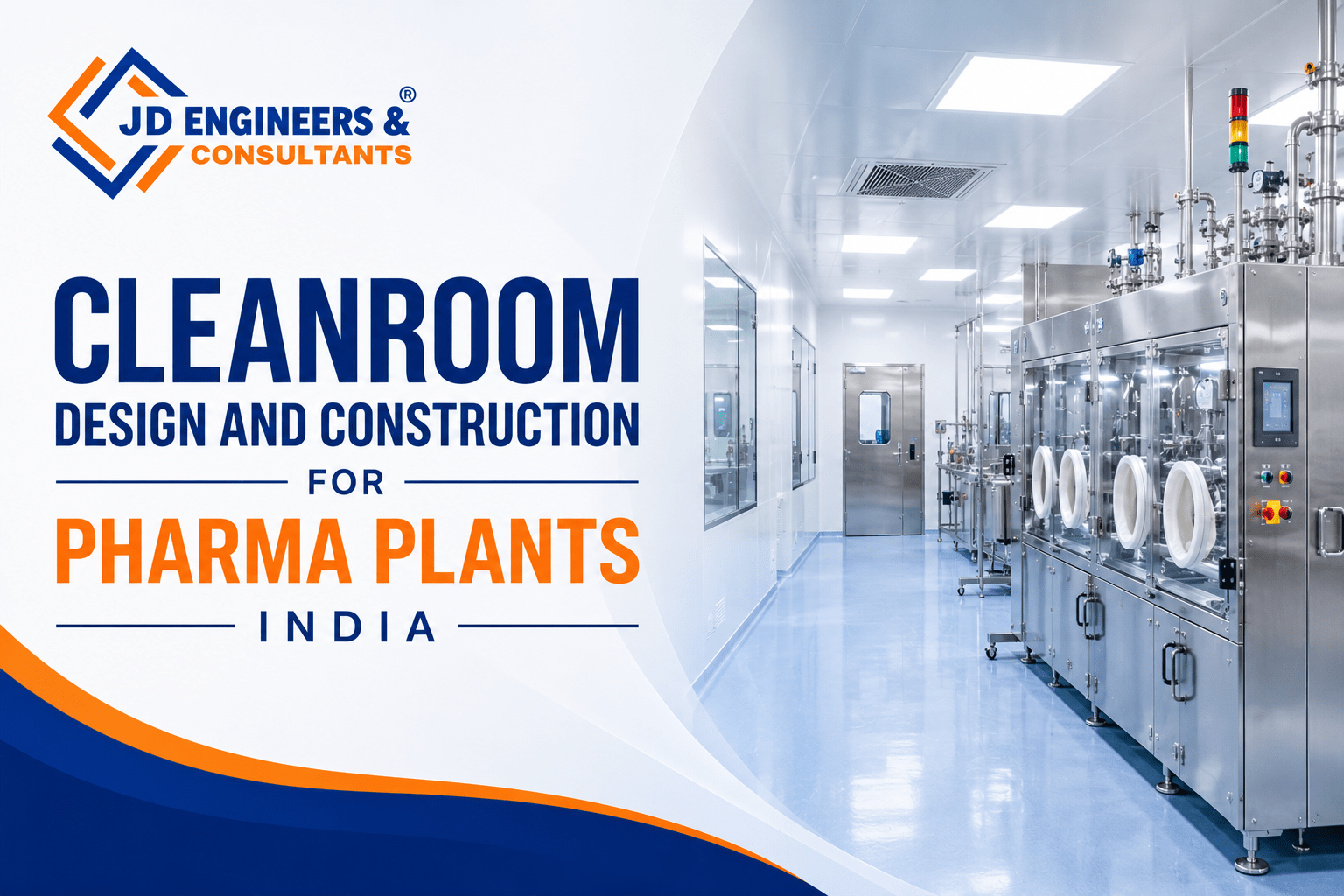
Cleanroom Engineering Services refer to the design, development, construction, and maintenance of controlled environments where temperature, humidity, airborne particles, microbes, and contaminants are regulated. Industries like pharmaceuticals, biotechnology, electronics, semiconductor manufacturing, healthcare, aerospace, food processing, and research laboratories depend on cleanrooms to ensure product quality, safety, and regulatory compliance.
In simple words, if a company needs an area where the air is extremely clean and controlled a cleanroom engineering service makes that possible.
Cleanroom engineering is one of the fastest-growing segments within Engineering Consulting Companies and Engineering Design Services due to rising global safety standards and advanced manufacturing requirements.
This blog explains why demand for cleanroom engineering is rising, how it benefits industries, and why businesses increasingly rely on experts like JD Engineers & Consultants.
Why Are Cleanroom Engineering Services Suddenly in High Demand?
Because industries now need safer, contamination-free, regulatory-compliant spaces more than ever. From vaccine production to semiconductor chips, precision and hygiene have become non-negotiable.
Let’s break down the surge from every angle.
What Is Driving the Massive Surge in Cleanroom Engineering Demand?
The past few years have transformed the way industries operate. Companies now prioritize hygiene, compliance, automation, innovation, and high-precision production. This shift has created a huge uplift in cleanroom requirements.
1. Stricter Global Regulations
Government bodies like:
- FDA
- WHO
- ISO
- GMP regulatory authorities
now enforce cleaner, safer production conditions. Compliance requires certified cleanroom design and engineering services.
2. Growth in Pharmaceuticals & Biotechnology
Post-pandemic, pharmaceutical companies increased manufacturing capacity for:
- vaccines
- injectables
- biologics
- medical devices
These processes require ISO-classified cleanrooms.
3. Semiconductor & Electronics Boom
Every smartphone, EV battery, smart device, or chip requires precise, micro-level manufacturing—possible only inside controlled clean environments.
4. Rise of Healthcare Infra & Labs
Hospitals now demand:
- isolation rooms
- ICU controlled zones
- sterile operation theatres
- clean corridors
Cleanroom engineering ensures safety for both patients and medical staff.
5. Shift Toward Automation & Smart Manufacturing
Modern Industry 4.0 factories demand precision. Cleanroom facilities help reduce waste, improve consistency, and extend equipment lifespan.
How Do Cleanroom Engineering Services Work?
A cleanroom is not just a room it is a complete engineered system. Here’s how cleanroom engineering services operate:
1. Requirement Study & Risk Assessment
Experts analyze:
- contamination risks
- equipment layout
- production workflow
- ISO classification needs
- environmental control levels
2. Engineering Design Services
This includes:
- HVAC design
- air filtration system (HEPA/ULPA)
- pressure zoning
- room layouts
- electrical & MEP integration
- automation systems
- utility planning
Companies like JD Engineers & Consultants, a trusted engineering consulting company, specialize in end-to-end cleanroom design.
3. Cleanroom Construction & Installation
Involves installation of:
- modular panels
- flooring
- air handling units
- ducting
- cleanroom doors & pass boxes
- laminar airflow units
- validation-ready systems
4. Validation, Testing & Certification
This ensures the cleanroom meets:
- ISO 14644
- GMP
- FDA & WHO guidelines
5. Annual Maintenance & Upgrades
Cleanrooms need:
- periodic testing
- filter replacements
- HVAC performance checks
- revalidation
Good engineering consultants maintain long-term cleanroom performance.
Which Industries Benefit the Most from Cleanroom Engineering?
Cleanrooms are now used in 20+ industries, but demand is highest in these sectors:
1. Pharmaceuticals & Life Sciences
Sterile manufacturing, R&D labs, formulation areas, QC labs.
2. Biotechnology & Genetics Labs
DNA/RNA sequencing labs, vaccine research, cell culture labs.
3. Electronics & Semiconductor Manufacturing
Wafer fabrication, microchip development, PCB assembly.
4. Aerospace & Defense
Precision manufacturing, satellite assembly, optical devices.
5. Food & Beverage Processing
Sterile filling areas, packaging rooms, quality labs.
6. Medical Devices
Implants, syringes, diagnostic tools, surgical equipment.
What Are the Key Components of a Modern Cleanroom?
A cleanroom requires several engineered components working in harmony:
- Air Handling Units (AHUs)
- HEPA/ULPA filters
- Laminar Airflow Systems
- Pressure differential controls
- Temperature & humidity controls
- BMS (Building Management Systems)
- Controlled HVAC design
- Cleanroom garments & air showers
- Modular wall partitions
- Epoxy/PVC flooring
- Cleanroom lighting systems
Every part must be engineered with precision to maintain contamination-free environments.
Why Should Businesses Hire a Professional Engineering Consulting Company for Cleanroom Projects?
Cleanroom development is not a DIY or contractor-based job. It involves scientific engineering expertise.
Here’s why companies hire experts like JD Engineers & Consultants:
1. Precision Engineering & Design
Experienced engineers design layouts that optimize airflow, ensure compliance, and reduce contamination.
2. Full-Service Solutions (Design + Build + Validation)
One vendor managing everything ensures:
- faster execution
- cost savings
- reduced coordination issues
3. Compliance Guarantee
Professional consultants ensure your cleanroom meets all international standards.
4. Scalability & Future-Ready Design
Cleanrooms can be expanded or upgraded easily with modular engineering.
5. Reduced downtime
Efficient engineering helps minimize production interruptions.
What Are the Benefits of Cleanroom Engineering Services?
1. Better Product Quality
Zero contamination ensures high product standards.
2. Regulatory Compliance
Avoid penalties, recalls, and regulatory issues.
3. Higher Productivity
Controlled environments increase operational efficiency.
4. Lower Operational Costs
Energy-efficient HVAC systems reduce electricity bills.
5. Increased Equipment Life
Clean environments reduce wear and tear.
6. Enhanced Customer Trust
Clients prefer companies with certified, validated cleanrooms.
How to Choose the Right Cleanroom Engineering Partner?
Use the following checklist:
- ✔ Experience in multi-industry cleanroom projects
- ✔ Strong engineering design capabilities
- ✔ Proven track record & certifications
- ✔ Compliance knowledge (ISO, GMP, FDA)
- ✔ In-house HVAC + MEP + validation team
- ✔ Affordable & transparent pricing
- ✔ Good post-installation support
JD Engineers & Consultants excels in all these areas, making them a dependable partner for cleanroom engineering services.
FAQs
Q1: What is the primary purpose of a cleanroom?
To control contamination, maintain a sterile environment, and ensure safe, precise manufacturing.
Q2: Do all industries need ISO-certified cleanrooms?
No. Only industries requiring contamination-free production—like pharma, electronics, and aerospace—must follow ISO 14644 standards.
Q3: How long does it take to build a cleanroom?
Depending on size and design complexity, a cleanroom project may take 3–12 weeks from design to certification.
Q4: What is the most important part of a cleanroom?
The HVAC system because it controls air quality, pressure, humidity, and temperature.
Q5: Are modular cleanrooms better than civil cleanrooms?
Yes. Modular cleanrooms are faster to build, easier to expand, and more cost-effective.
Q6:Is cleanroom maintenance expensive?
Not necessarily. With modern energy-efficient HVAC systems, maintenance is affordable and predictable.
Q7:Can small companies afford cleanroom engineering services?
Yes. Cleanrooms now come in scalable sizes and budgets suitable even for startups.
Q8:Do cleanrooms help reduce product rejection rates?
Absolutely. They significantly reduce contamination-related product failures.
Key Takeaways
- Cleanroom engineering services are essential for contamination-free production.
- Demand is rising due to stricter regulations, advanced manufacturing, and global quality expectations.
- Industries like pharmaceuticals, biotech, electronics, and healthcare rely heavily on cleanrooms.
- Choosing a skilled engineering consulting company ensures compliance and long-term performance.
- JD Engineers & Consultants offers complete cleanroom engineering design services, construction, and validation.
Conclusion
Cleanrooms are no longer optional—they are fundamental to modern manufacturing, healthcare, and research. As industries push toward precision, hygiene, innovation, and global compliance, cleanroom engineering services will continue to surge in demand. Businesses that invest early will enjoy higher quality, reduced risks, and stronger market confidence.
JD Engineers & Consultants brings unmatched expertise in delivering high-performance, compliant, and future-ready cleanrooms across industries. Whether you need a small lab setup or a full-scale industrial cleanroom, we help you build it right the first time.
Need a high-quality, compliant, and future-ready cleanroom?
Contact JD Engineers & Consultants today for expert Cleanroom Engineering Services, Engineering Design Services, and end-to-end project execution.