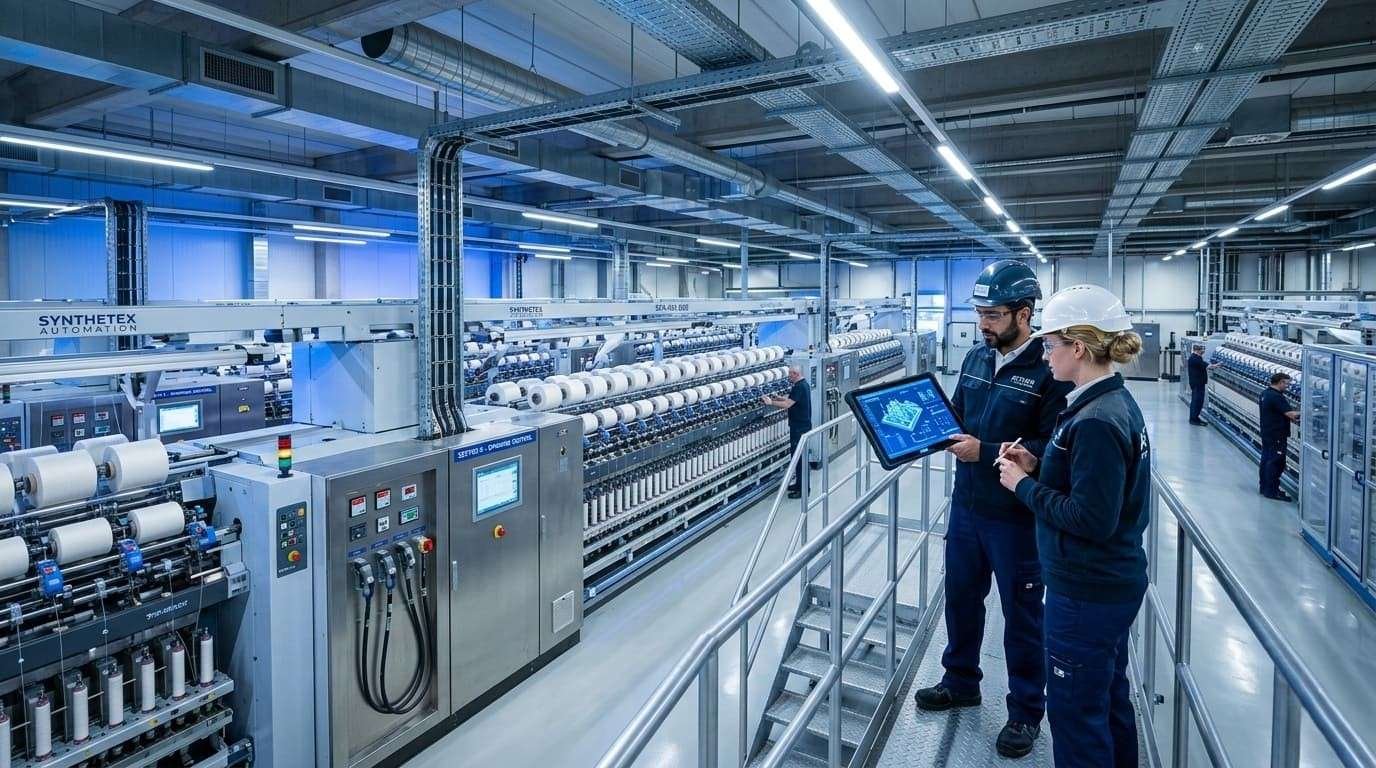
Textile plant engineering consultants help manufacturers scale faster by delivering expert yarn manufacturing plant design, optimized textile factory layout design, precision HVAC systems, and compliant electrical design for textile mills.
Through integrated Turnkey Project Services, Engineering Design Services, and specialised industrial infrastructure planning, these consultants reduce commissioning timelines by 20–35%, cut energy costs by up to 30%, and prevent costly construction rework.
JDEC (JD Engineers & Consultants) has delivered integrated textile engineering consultancy across multiple countries since 2003.
Why the Textile Industry Needs Engineering Consultants in 2026
The global textile industry was valued at USD 1.84 trillion in 2025 and is projected to reach USD 2.22 trillion by 2030, according to Statista.
Manufacturers today face multiple pressures simultaneously:
- Expanding production capacity
- Reducing operational costs
- Meeting strict environmental regulations
- Integrating automation and energy-efficient infrastructure
Specialist textile plant engineering consultants solve these challenges through fully integrated Turnkey Project Services that combine:
- Engineering Design Services
- Architectural Design Services
- Civil & Structural Engineering Services
- Mechanical Engineering
- Electrical, Instrumentation & Controls, and ELV Systems
- HVAC and Building Management Systems
- Environmental Engineering Design Services
Instead of coordinating multiple contractors, manufacturers work with one expert consultancy team that designs, integrates, and manages the entire textile project lifecycle.
What Is a Textile Plant Engineering Consultant?
A textile plant engineering consultant is a specialist firm providing end-to-end technical services for the design, construction, expansion, and optimization of textile manufacturing facilities.
These consultants combine industrial engineering expertise with textile process knowledge to deliver efficient, scalable manufacturing plants.
Core Service Areas
Typical textile engineering consultancy services include:
- Yarn manufacturing plant design
- Textile factory layout design
- HVAC for the textile industry
- Electrical design for textile mills
- Cleanroom Design Services for specialty textile production
- Fire Protection Systems
- Environmental Engineering Design Services
- Project management and site supervision
- ETP (Effluent Treatment Plant) design
- Regulatory and sustainability compliance
Unlike general construction consultants, a specialised textile project consultancy understands the technical demands of spinning, weaving, dyeing, and finishing operations.
Yarn Manufacturing Plant Design: The Foundation of Efficient Production
Why Plant Design Determines Long-Term Profitability
Poor plant design creates:
- Production bottlenecks
- Safety risks
- Energy inefficiencies
- Expensive future retrofits
Getting the engineering right at the beginning is one of the highest-ROI investments a textile manufacturer can make.
What Expert Yarn Plant Design Includes
Professional consultants combine Mechanical Engineering, Electrical Engineering, and Architectural Design Services to deliver a fully integrated spinning plant.
Key design elements include:
Process Mapping
Synchronizing operations such as:
- Bale opening
- Carding
- Drawing
- Roving
- Ring spinning
- Winding
Equipment Selection
Machines are matched to:
- Fiber type
- Yarn count range
- Production targets
Utility Integration
Pre-routing of utilities including:
- Compressed air
- Suction systems
- Power supply
- Water lines
This avoids costly modifications later.
Scalability Planning
Structural capacity and utilities are designed for future expansion, allowing new lines to be added without major reconstruction.
Industry Data (2026)
Plants designed using integrated engineering consultancy achieve 20–35% faster commissioning timelines compared with internally managed projects.
Source: International Textile Manufacturers Federation (ITMF), 2025 Annual Report.
Textile Factory Layout Design: Maximizing Output per Square Meter
What Does Layout Design Actually Change?
Textile factory layout design determines how materials move, how efficiently workers operate, and how easily the plant can expand.
A well-engineered layout can increase throughput by 15–25% without adding new machines.
Key Layout Principles Used by JDEC Consultants
Lean Material Flow
Raw materials enter one end of the plant while finished goods exit the other — eliminating backtracking.
Process Zone Separation
Production areas are organized into zones:
- Spinning
- Winding
- Quality control
- Utilities
This prevents cross-contamination and operational congestion.
Expansion Corridors
Structural bays and utility lines are designed for future production expansion.
Compliance by Design
Factory layouts include:
- Fire exit requirements
- Emergency evacuation routes
- Safety standards
Integrated Fire Protection Systems ensure regulatory compliance.
BIM Modelling
Using Building Information Modeling (BIM) allows clients to visualize the plant before construction begins.
HVAC for the Textile Industry: Climate Control That Protects Quality
Why HVAC Is Critical in Textile Manufacturing
Textile fibers are extremely sensitive to humidity and temperature.
Even 5–10% humidity variation can lead to:
- Yarn breakage
- Lower tensile strength
- Increased waste
Proper HVAC and Building Management Systems ensure consistent fiber behavior and product quality.
Key Features of Textile HVAC Systems
Spinning Room Humidification
Maintained at 55–65% relative humidity for optimal yarn formation.
Weaving Room Climate Control
Stable conditions prevent warp breaks and machine downtime.
Dust and Lint Extraction
High-velocity suction systems remove airborne fibers to protect workers and machinery.
Energy Recovery Ventilation
Heat exchangers recover energy from exhaust air, reducing power consumption.
Zone-Based Environmental Control
Separate climate systems for:
- Spinning
- Winding
- Dyeing
- Office areas
Energy Efficiency Data (2026)
Well-designed industrial HVAC systems reduce energy consumption by up to 30% compared with conventional installations.
Source: ASHRAE (American Society of Heating, Refrigerating and Air-Conditioning Engineers).
In large textile mills operating 24/7, this can translate to annual savings between USD 80,000 and USD 400,000, depending on plant size and electricity tariffs.
Electrical Design for Textile Mills: Safe and Future-Ready
Textile plants use modern equipment with:
- Variable Frequency Drives (VFDs)
- Servo-controlled looms
- Automated inspection systems
These create non-linear electrical loads, requiring specialized power infrastructure.
JDEC Electrical Engineering Scope
Integrated Electrical, Instrumentation & Controls, and ELV Systems design includes:
Load Analysis
Accurate power demand calculations for all production and utility equipment.
Power Distribution
Design of:
- High-voltage intake systems
- Transformers
- Main distribution boards (MDB)
- Sub-distribution systems (SMDB)
Harmonic Mitigation
Active and passive filters protect sensitive electronics.
Power Factor Correction
Automatic PFC panels reduce energy penalties from utilities.
Smart Energy Monitoring
Real-time electricity consumption tracking across production areas.
Additional Specialized Engineering Services for Textile Plants
Modern textile facilities require multiple specialized engineering disciplines working together.
A full-service consultancy like JDEC provides:
Architectural Design Services
Industrial building design optimized for textile operations.
Civil & Structural Engineering Services
Heavy-load structural design for spinning machines and industrial equipment.
Mechanical Engineering
Process piping, machinery foundations, and mechanical utilities.
Fire Protection Systems
Integrated fire detection and suppression systems compliant with international safety standards.
Cleanroom Design Services
Used in high-precision textile applications such as technical textiles and medical fabrics.
Environmental Engineering Design Services
Wastewater treatment, effluent treatment plants (ETP), and pollution control systems.
Key Benefits of Textile Project Consultancy
| Benefit Area | Measurable Impact |
| Commissioning Timeline | 20–35% faster vs in-house projects |
| Energy Cost Reduction | Up to 30% through optimized HVAC |
| Rework Cost Avoidance | 8–12% of project cost saved |
| Throughput Improvement | 15–25% higher production efficiency |
| Environmental Compliance | Alignment with global sustainability standards |
How to Work with a Textile Engineering Consultant
Step 1 — Initial Consultation & Feasibility Study
Manufacturers share:
- Production targets
- Product range
- Budget
- Site details
Consultants prepare feasibility reports with indicative layouts, utility planning, and CapEx estimates.
Typical timeline: 2–4 weeks
Step 2 — Basic Engineering Design (BED)
This stage includes:
- Process flow diagrams
- Preliminary layouts
- HVAC load calculations
- Electrical single line diagrams
These are used for permits and contractor tendering.
Step 3 — Detailed Engineering Design (DED)
Final construction documentation includes:
- Engineering drawings
- Equipment specifications
- Bill of quantities
- Vendor procurement documents
BIM models allow full plant visualization before construction.
Step 4 — Procurement & Contract Management
Consultants manage equipment sourcing, vendor evaluation, and delivery schedules to avoid project delays.
Step 5 — Construction Supervision
Engineers conduct site inspections to ensure construction follows design specifications.
Step 6 — Commissioning & Handover
Final project stage includes:
- System performance testing
- Operational training
- As-built documentation
- Maintenance manuals
Frequently Asked Questions
Q1. What qualifications should a textile plant engineering consultant have?
A: Consultants should hold mechanical, electrical, or chemical engineering degrees, professional accreditation, and extensive experience in textile plant design.
Q2. How much does textile engineering consultancy cost?
Consultancy fees typically range from 3% to 8% of total project cost, depending on scope and project complexity.
Q3. Can consultants help expand existing textile factories?
Yes. Consultants analyze existing infrastructure and design expansion plans that increase production without disrupting ongoing operations.
Q4. How long does a textile plant project take?
A full textile manufacturing project usually takes 18–30 months, including feasibility, design, construction, installation, and commissioning.
Ready to Scale Your Textile Business?
Since 2003, JDEC (JD Engineers & Consultants) has delivered integrated Turnkey Project Services and Engineering Design Services for textile manufacturers across multiple countries.
Whether you are planning:
- A new yarn manufacturing plant
- A textile factory layout redesign
- Advanced HVAC and Building Management Systems
- Electrical, Instrumentation & Controls, and ELV Systems
- Or full Environmental Engineering Design Services
Our team of experienced engineers can help you design, build, and scale your textile facility efficiently. Contact us today for Specialist service.